
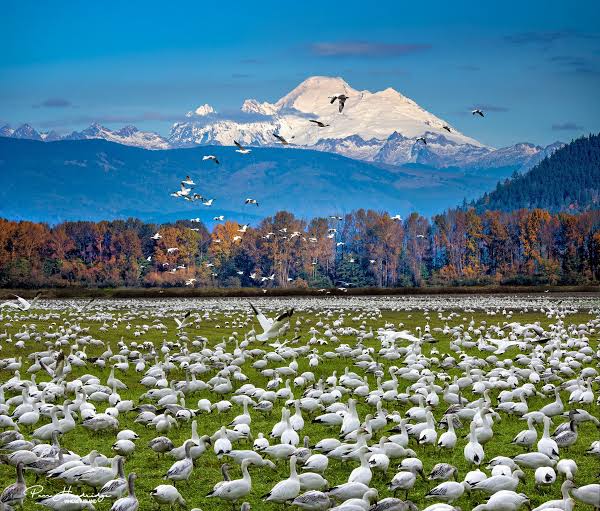
There is something almost unbelievable about seeing thousands of snow geese gathered in a field in Washington’s Skagit Valley. From a distance, the farmland looks like it has been dusted with snow. Then the whole field starts moving.
Suddenly, thousands of white birds rise into the air, their black-tipped wings flashing as they swirl across the sky. The noise is incredible, and for a few moments, it feels like the entire landscape has come alive.
And the snow geese are only part of the story. Travel farther east along the Skagit River, and another winter wildlife spectacle awaits: bald eagles gathering along the riverbanks to feed on salmon.


Winter birdwatching in the Skagit Valley is one of those Pacific Northwest experiences that deserves far more attention. You don’t need to be an experienced birder, own expensive camera equipment, or tackle a difficult hike. Some of the most remarkable sightings happen from roadside viewing areas, quiet wildlife reserves, and short riverside walks.
In this guide, I’ll cover the best places to see Skagit Valley snow geese and bald eagles, when to visit, how to photograph them, and how to turn a winter wildlife trip into a memorable Washington weekend.
When Is the Best Time to See Snow Geese and Eagles in Skagit Valley?
The best overall time for winter birdwatching in Skagit Valley is generally November through February, although some migrating birds arrive earlier and remain into March or April.
Snow geese and bald eagles follow different seasonal patterns, so the ideal timing depends on which birds you most want to see.
| Wildlife | Best Time | Where to Look |
|---|---|---|
| Snow geese | November–February; possible October–April | Fir Island, Skagit delta farmland |
| Bald eagles | December–January for concentrated river viewing | Rockport, Marblemount, upper Skagit River |
| Trumpeter swans | November–March | Skagit farmland, wetlands and sloughs |
| Hawks and other raptors | Late fall through winter | Samish Flats and West 90 |
My recommendation: If you’re planning one winter trip specifically to see both snow geese and bald eagles, aim for December or January. That’s usually your best opportunity to combine the two experiences.
Remember that wildlife doesn’t operate on a schedule. Snow geese move between fields and coastal habitat, while eagle concentrations depend heavily on salmon runs, river conditions, and available food. One weekend might be spectacular, and another much quieter.
Why Do So Many Snow Geese Gather in Skagit Valley?
Every autumn, enormous flocks of snow geese migrate south from Arctic breeding grounds, including Wrangel Island off the northern coast of Russia.
These birds follow part of the Pacific Flyway, an important migratory route connecting northern breeding grounds with winter feeding areas along the Pacific Coast.
The Skagit Valley is especially attractive because of its combination of agricultural fields, wetlands, estuaries, and relatively mild winter temperatures.
The geese feed on grasses, agricultural crops, and other plant material. Protected areas like the Fir Island Farm Reserve provide important feeding and resting habitat, helping the birds conserve energy for their eventual journey north.


What makes the experience particularly memorable is the sheer number of birds. Large flocks can cover entire sections of farmland. When they lift off together, the sky fills with white wings and a chorus of honking calls.
It’s also a reminder of how connected the Pacific Northwest is to places thousands of miles away. Those birds standing in a muddy Washington field may have spent their summer raising young in the Russian Arctic.
Best Places to See Snow Geese in Skagit Valley
Snow geese are not confined to one field or viewing location. They move around the Skagit River delta according to food availability, weather, and disturbance.
However, there are several reliable areas worth checking during the winter migration season.
1. Fir Island Farm Reserve – The Best Place to Start
If I were recommending just one location for someone hoping to see snow geese in Washington, it would be Fir Island Farm Reserve, part of the Skagit Wildlife Area near Mount Vernon.
This protected reserve was established specifically to provide feeding and resting habitat for snow geese and other migratory birds.
Surrounding agricultural land is managed in part to support wintering geese, while nearby estuary restoration areas provide habitat for many other species.
Visitors can use the designated parking area and short dike trail to enjoy views across the landscape toward Skagit Bay.
On a good winter day, you might see enormous flocks feeding in nearby fields or birds passing overhead as they move between farmland and the estuary.
Know before you go: A Washington Discover Pass or qualifying WDFW Vehicle Access Pass is required for parking. Public access is restricted to designated routes and viewing areas. The reserve is closed during hours of darkness.
Official Fir Island Farm Reserve visitor information and access rules.
2. Fir Island Road and the Surrounding Farmland
Sometimes the best snow goose sightings are not inside a designated wildlife area but in the agricultural fields surrounding it.
The rural landscape around Fir Island Road, Best Road, and the roads between Conway and La Conner can be excellent places to spot wintering geese.
During migration season, it’s worth scanning the fields as you travel. You might see a small group of birds grazing, or you might suddenly discover thousands gathered together.
It’s tempting to stop immediately when you see a big flock, but these are working agricultural roads, not dedicated wildlife-viewing routes.
- Only stop where parking is legal and completely clear of traffic.
- Never block farm entrances, driveways, or agricultural equipment.
- Stay off private farmland unless you have permission.
- Use binoculars or a telephoto lens rather than approaching the birds.
One of the best things about this kind of wildlife watching is not knowing exactly what you’ll find. The drive itself becomes part of the adventure.


3. Wiley Slough and the Skagit Wildlife Area Headquarters
Another worthwhile stop is Wiley Slough, also known as the Skagit Headquarters Wildlife Area Unit.
This wetland and estuary habitat is excellent for observing a variety of winter birds. While large snow goose flocks are not guaranteed here, you can look for ducks, shorebirds, swans, and birds of prey.
It’s particularly appealing if you enjoy slower wildlife watching rather than simply searching for the largest possible flock.
Important access update: Restoration construction at the nearby Island Unit is affecting access to Skagit Headquarters. The parking area, access road, and boat launch may close intermittently during the construction period. Check the official WDFW access page before visiting.
4. Samish Flats – A Bonus Stop for Birds of Prey
If you’re interested in more than snow geese, consider heading north toward the Samish Flats near Edison.
This expansive agricultural landscape is one of western Washington’s better-known winter birding areas, particularly for raptors.
The Samish Wildlife Area Unit, commonly called West 90, has a designated viewing area where birdwatchers can scan the surrounding fields and marshes.
Depending on the conditions, you might spot bald eagles, northern harriers, red-tailed hawks, or short-eared owls.
West 90 is more of a raptor-watching destination than a guaranteed snow goose location, but it makes an excellent addition to a winter birding outing.
Bring binoculars, dress warmly, and be prepared to spend some time watching the landscape. The best wildlife moments often happen when you stop rushing.
See WDFW’s Samish Wildlife Area guide for access information and parking requirements. The nearby Samish River Unit, known as East 90, has additional seasonal restrictions, so don’t assume both areas have the same access rules.
Where to See Bald Eagle Gatherings Along the Skagit River
While thousands of snow geese gather around the lower Skagit Valley, bald eagles create a different kind of winter spectacle farther inland.
Every winter, bald eagles concentrate along portions of the upper Skagit River, particularly around Rockport and Marblemount.
The reason is food.
Salmon returning to the river to spawn provide an important food source. After spawning, many salmon die, and their remains help sustain bald eagles during the colder months.
Look carefully at the cottonwood trees along the banks and the gravel bars in the river. What initially looks like a dark shape on a branch may turn out to be a bald eagle watching the water below.


5. Skagit River Bald Eagle Interpretive Center, Rockport
The Skagit River Bald Eagle Interpretive Center is one of the best places to begin an eagle-watching trip, especially if you’re unfamiliar with the area.
Located at Howard Miller Steelhead Park in Rockport, the seasonal center provides information about the eagles, salmon, and natural history of the Skagit River watershed.
Volunteers can help visitors understand where eagles have been spotted and how to view them responsibly. During its operating season, the center also offers guided nature walks and educational programs.
Address: 52809 Rockport Park Road, Rockport, WA 98283.
Winter 2026–27 update: The published seasonal event listing announces weekend programming from December 26, 2026, through January 31, 2027, generally 10 a.m.–4 p.m., with some additional holiday dates. Check directly with the center before traveling because its online pages may display schedules from earlier seasons.
Visit the official Skagit River Bald Eagle Interpretive Center website for current programs, viewing information, and contact details.
6. Howard Miller Steelhead Park and the Rockport Bridge
Even if the Interpretive Center is closed when you arrive, Howard Miller Steelhead Park is worth considering for river viewing.
The park sits beside the Skagit River and offers access to riverside areas where eagles can sometimes be seen resting in trees or feeding near gravel bars.
The nearby Rockport Bridge is another recognized eagle-watching location. From the designated sidewalk, visitors can scan the river upstream for birds perched in trees or gathered near the water.
This is an especially convenient stop because the park and bridge are close together.
Bring binoculars and take your time. Bald eagles can be surprisingly difficult to spot when they’re sitting motionless against a backdrop of bare winter branches.
7. Sutter Creek Rest Area and the Upper Skagit River
Another established eagle-viewing location is the rest area near Sutter Creek at approximately milepost 100 on State Route 20.
This location provides views toward the Skagit River, including gravel bars and surrounding forest where eagles may gather.
It’s a useful stop when exploring the river corridor between Rockport and Marblemount.
Keep an eye on river conditions and winter weather. The upper valley can be colder than the coastal farmland, with icy roads and changing conditions.
The Interpretive Center also identifies the Bald Eagle Natural Area on Martin Road, off State Route 530, as another potential viewing location. Check its current recommended eagle-viewing sites before heading out.
8. Take a Guided Winter Eagle-Watching River Trip
For a different perspective, consider a professionally guided winter trip along the Skagit River.
Some local operators offer seasonal eagle-viewing river tours, giving visitors the chance to explore sections of the river with knowledgeable guides.
These trips can provide a completely different view of the river environment, including eagle habitat that is difficult to observe from public roads and parks.
One provider to investigate is Triad River Tours, which advertises winter bald eagle river trips.
Tour schedules depend on weather, river conditions, and seasonal operations. Choose an experienced operator that follows wildlife-viewing guidelines, and confirm availability before making plans.


How to Spot Bald Eagles in Winter
You might imagine that finding a bald eagle would be easy. After all, they’re enormous birds with unmistakable white heads.
But when they’re perched in tall trees across a wide river, they can blend into the landscape remarkably well.
Start by scanning the tallest trees along the riverbanks, especially those overlooking gravel bars and open water.
Look for white heads, dark bodies, and the distinctive silhouette of a large bird sitting high above the river.
Also remember that not every bald eagle has a white head. Juvenile and immature birds are predominantly brown, often with mottled feathers, and take several years to develop the familiar adult appearance.


Don’t assume sunshine is essential. The local eagle-watching organization notes that overcast days can be excellent for observing eagles, especially when birds spend more time perched along the river instead of soaring high overhead.
Don’t Miss the Trumpeter Swans
Snow geese may get most of the attention, but they share the Skagit Valley with another spectacular winter visitor: the trumpeter swan.
These enormous white birds are among the most impressive waterfowl in North America, with wingspans that can approach ten feet.
Unlike snow geese, which often gather in huge, noisy flocks, trumpeter swans are frequently seen in smaller groups feeding in agricultural fields or resting on wetlands.
Look for their long necks and black bills. They can sometimes be confused with tundra swans, another species that winters in the region.


Debay’s Slough near Mount Vernon is another wildlife area worth researching if swans are high on your list. Public access to the game reserve is limited, so follow the posted boundaries and use the official WDFW guidance.
My Suggested Skagit Valley Winter Birdwatching Itinerary
You can explore part of the Skagit Valley in a single day from Seattle, but if seeing both the snow geese and river eagles is your main goal, I would recommend spreading the trip over two days.
The lower Skagit delta and upper Skagit River are separate wildlife-viewing areas, and trying to rush through both can mean missing the very thing you came to see.
Day 1: Snow Geese, Farmland and La Conner
- Morning: Start at Fir Island Farm Reserve after daylight. Scan the surrounding fields and estuary for snow geese and other waterfowl.
- Late morning: Explore legal roadside viewing areas around Fir Island and nearby farmland.
- Lunch: Head into La Conner for a relaxed meal and a waterfront stroll.
- Afternoon: Visit additional accessible wildlife areas or head toward Samish Flats for raptor watching.
- Evening: Stay around La Conner, Mount Vernon, or Burlington, depending on your plans for the next morning.
La Conner is a particularly nice place to break up the day. It’s a charming waterfront town filled with galleries, independent shops, and places to eat.
For ideas beyond birdwatching, check out our guide to things to do in La Conner, Washington.
Day 2: Bald Eagles and the Upper Skagit River
- Morning: Drive east toward Rockport via State Route 20, checking winter road conditions first.
- Late morning: Visit Howard Miller Steelhead Park and scan the river from public viewing areas.
- Midday: Stop at the Bald Eagle Interpretive Center if it is open, or join a scheduled guided walk.
- Afternoon: Explore additional established viewing locations along the upper Skagit River toward Marblemount.
- Before dark: Begin the drive home while there is still daylight, particularly if temperatures are dropping.
If you’d rather keep the trip to one day, I would focus on Fir Island and the lower Skagit Valley. There is plenty to see without adding the longer drive east.
Tips for Photographing Snow Geese and Bald Eagles
Skagit Valley can be an outstanding winter photography destination, but wildlife photography requires patience and a willingness to work with whatever nature gives you.
For snow geese: Look for large groups feeding in open fields and watch for natural changes in flock movement. Sometimes a distant group suddenly rises into the air, creating an incredible opportunity for wide landscape photographs.
A telephoto lens helps capture individual birds, but don’t overlook wider compositions showing the surrounding farmland, mountains, and enormous scale of the gathering.
For bald eagles: Bring binoculars and, if available, a telephoto lens. A lens in the 300–600mm range can be particularly useful for distant subjects, although shorter lenses and smartphones can still capture scenic views and environmental images.
Overcast skies can create soft light for perched eagles, while clearer conditions may work well for photographing soaring birds.
Most importantly, don’t try to force a wildlife encounter. Chasing geese into flight or approaching feeding eagles can disrupt their natural behavior and waste energy they need to survive winter.
Important Wildlife-Watching Etiquette
Watching these incredible birds is a privilege, and protecting their winter habitat matters more than getting the perfect photograph.
- Stay on public land: Many fields and riverbanks are privately owned.
- Keep your distance: Use binoculars or a long lens rather than moving closer.
- Don’t disturb feeding birds: Deliberately flushing geese or eagles wastes valuable energy.
- Use designated parking: Never block farm roads, gates, or traffic.
- Leave drones at home: Avoid activities that could disturb large wintering flocks and check all applicable flight restrictions.
- Respect wildlife-area rules: Some areas permit hunting, have seasonal closures, or restrict access to specific trails.
- Keep dogs controlled: Follow posted pet restrictions and never let pets chase wildlife.
One simple rule is worth remembering: if the birds change their behavior because you’re approaching, you’re probably too close.
What to Bring for Winter Birdwatching in Skagit Valley
Winter in the Skagit Valley is generally mild compared with the mountains, but it can also be wet, windy, and surprisingly cold when you’re standing still in an exposed field.
Here’s what I’d pack:
- Waterproof jacket and warm layers
- Waterproof boots or comfortable weather-resistant shoes
- Binoculars
- Camera or smartphone with a zoom lens
- Gloves and a warm hat
- Thermos of coffee or tea
- Discover Pass for relevant state wildlife areas
- Portable charger and offline maps
- Snacks and water
For the upper Skagit River, check the weather and highway conditions before leaving. Snow and ice are more likely farther inland than around the coastal farmland.
Keep in mind that State Route 20’s high mountain section over the North Cascades closes seasonally. The eagle-viewing areas around Rockport and Marblemount are approached from the west and are not beyond the usual mountain-pass closure.
Where to Stay in Skagit Valley for Winter Wildlife Watching
If you’re turning your birdwatching trip into an overnight getaway, there are several good areas to use as a base.
La Conner: My pick for a scenic, relaxed weekend. This small waterfront town has restaurants, galleries, and a peaceful atmosphere, making it a lovely place to return to after exploring the snow goose fields.
Mount Vernon: A practical base for exploring the lower Skagit Valley, with convenient access to Interstate 5, restaurants, and services.
Burlington: Another convenient option, especially if you want easy highway access and a straightforward starting point for driving toward Rockport.
Concrete or Rockport: Better suited to travelers who want to spend more time watching eagles along the upper river rather than focusing on snow geese near the coast.
For more trip inspiration, explore our guides to the best small towns in Washington State and things to do in Anacortes.
Other Places to Explore Near Skagit Valley
One of the great things about this part of Washington is how much variety you can fit into a weekend.
If you have extra time, consider visiting Deception Pass State Park on Whidbey Island and Fidalgo Island. Its dramatic bridge, rocky coastline, and evergreen forests provide a completely different Pacific Northwest experience.
Our complete guide to Deception Pass State Park covers the best scenic areas, trails, camping options, and useful visitor information.
Or, if you’d prefer a waterfront town, spend a little extra time around La Conner or Anacortes before heading home.
Frequently Asked Questions About Skagit Valley Snow Geese and Eagles
What month is best for seeing snow geese in Skagit Valley?
November through February is generally an excellent time to look for snow geese, with December and January popular for winter birdwatching. They can be present from October into early spring, although numbers and locations vary.
Where is the best place to see snow geese near Seattle?
Fir Island Farm Reserve, near Mount Vernon in Skagit County, is one of the best places to begin. Surrounding agricultural fields on Fir Island are also worth scanning from safe, legal public viewing locations.
When do bald eagles gather along the Skagit River?
Winter eagle concentrations are commonly associated with late fall and winter salmon runs. December and January are particularly popular for eagle watching around Rockport and Marblemount, although timing changes with salmon availability and river conditions.
Can you see snow geese and bald eagles on the same day?
Yes. You can visit the Skagit delta for snow geese and then drive east toward Rockport for bald eagles. However, a two-day trip provides more flexibility, particularly when wildlife sightings are unpredictable.
Do you need a Discover Pass to see snow geese?
A Discover Pass or qualifying WDFW Vehicle Access Pass is required for parking on WDFW-managed recreation lands, including Fir Island Farm Reserve. Requirements vary elsewhere, so check the specific site before arriving.
Is winter birdwatching in Skagit Valley suitable for families?
Absolutely. Many viewing opportunities require little walking, making the experience suitable for families and travelers who prefer gentle outdoor activities. Keep children safely away from roads and water, and help them observe wildlife without disturbing it.
Why Skagit Valley Deserves a Place on Your Winter Washington Bucket List
Washington is famous for its dramatic mountains, old-growth forests, and rugged coastline. But some of its most extraordinary natural experiences happen in places that don’t look especially dramatic at first glance.
A flat agricultural field near Mount Vernon might not seem like a destination worth planning a trip around. Then thousands of snow geese take flight, and suddenly it’s one of the most remarkable things you’ve seen in the Pacific Northwest.
Farther east, the quiet Skagit River offers the chance to watch bald eagles perched above the water, waiting for their next meal against a backdrop of forested mountains.
Both experiences remind me why I love exploring the quieter corners of Washington. You don’t always need a famous national park, an epic hike, or perfect weather to have an unforgettable outdoor adventure.
Sometimes all you need is a pair of binoculars, a little patience, and the willingness to see what the season brings.
Planning more adventures? Explore our Washington travel guides for more hidden gems, scenic drives, small towns, and unforgettable places to discover throughout the Pacific Northwest.
Useful Resources for Planning Your Visit
- Washington Department of Fish and Wildlife – Skagit Wildlife Area
- Skagit River Bald Eagle Interpretive Center
- Washington Wildlife Area Parking and Pass Information
- WSDOT Real-Time Road Conditions
- Visit Skagit Valley
Content creator and writer for multiple websites including All About Glamping, Fit Living Lifestyle, and Live Dream Discover. A full-time traveler who has spoken at various travel conferences around the world.