
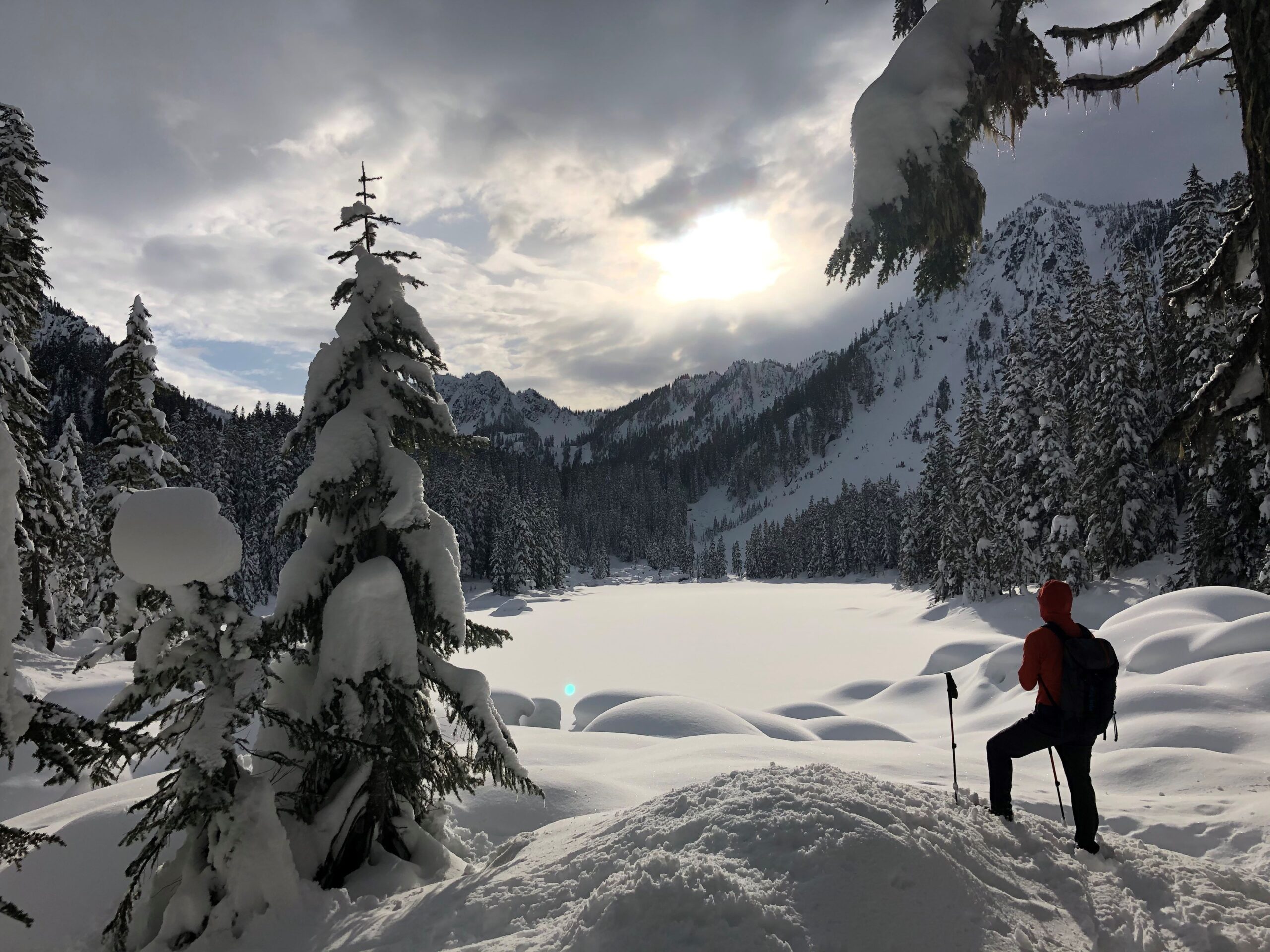
One of the best things about living in or visiting Seattle during winter is how quickly the scenery can change. You can leave the city under its familiar grey skies and, a little over an hour later, find yourself surrounded by snow-covered evergreen trees, quiet mountain trails and some spectacular Cascade Mountain scenery.
And you don’t need to ski or snowboard to enjoy it.
Snowshoeing near Seattle is one of our favourite types of winter adventure to recommend, especially for people who love being outdoors but don’t necessarily want a strenuous mountain expedition. With the right trail and conditions, snowshoeing can be as simple as taking a peaceful walk through a snowy forest.
Some of the best snowshoe trails near Seattle are around Snoqualmie Pass, only about 50 miles east of the city. Others lead through the beautiful forests of Stevens Pass, along the shores of Lake Wenatchee or into the spectacular winter landscape of Mount Rainier National Park.
Whether you’re looking for an easy beginner snowshoe trail, a family-friendly outing or something a little more adventurous, we’ve rounded up 10 beautiful places to go snowshoeing near Seattle, with trail distances, approximate drive times, parking information, permit requirements and useful winter safety tips.
Quick recommendation: Gold Creek Pond, Hyak and Lake Easton are good places to start when conditions are suitable. For a more organised snowshoe experience, consider the designated trails at Stevens Pass Nordic Center or a ranger-guided outing at Mount Rainier’s Paradise area when those programmes are operating.
Updated for winter 2026–27: This guide reflects published trail information and access rules available in October 2026. Snow levels, avalanche forecasts, trail damage, grooming, road closures and guided-tour schedules change throughout winter. Always confirm current access with the relevant park or trail operator before travelling. Routes described as beginner-friendly are not automatically free of winter hazards.
Best Snowshoeing Near Seattle: Quick Picks
- Best for first-time snowshoers: Gold Creek Pond, Snoqualmie Pass, when winter access is permitted.
- Best close-to-Seattle snowshoe destination: Hyak Sno-Park.
- Best gentle forest outing: Lake Easton Sno-Park.
- Best for exploring a marked winter trail network: Crystal Springs Sno-Park.
- Best designated snowshoe trails: Stevens Pass Nordic Center.
- Best moderately challenging forest climb: Lanham Lake.
- Best snowy lake scenery: Lake Wenatchee State Park.
- Best rewarding mountain viewpoints: Nason Ridge.
- Best iconic winter mountain scenery: Mount Rainier Paradise.
- Best quieter Cle Elum-area escape: Salmon La Sac Sno-Park.
Snowshoe Trails Near Seattle Comparison Table
These are approximate winter driving times from central Seattle under favourable conditions, not guaranteed travel times. A storm, I-90 closure, Stevens Pass traffic or Mount Rainier road restriction can change your plans significantly.
| Snowshoe location | Approx. drive | Snowshoe distance | Difficulty | Parking / access |
|---|---|---|---|---|
| Gold Creek Pond | 1–1.5 hrs | 2.8 mi roundtrip | Easy terrain | Sno-Park permit; seasonal closure |
| Hyak Sno-Park | 1–1.5 hrs | Flexible; choose 1–3 mi | Easy | Special-fee Sno-Park |
| Lake Easton | 1.25–2 hrs | Flexible; choose 1–3 mi | Easy | Special-fee Sno-Park |
| Crystal Springs | 1.25–2 hrs | Flexible; choose 1–3 mi | Easy–moderate | Special-fee Sno-Park |
| Stevens Pass Nordic Center | 2–2.5 hrs | 0.5–2.6 mi options | Easy–moderate | Nordic trail ticket |
| Lanham Lake | 2–2.5 hrs | 3.2 mi roundtrip | Moderate; backcountry | Nordic Center trailhead; separate route |
| Lake Wenatchee | 2.5–3.5 hrs | Flexible; up to 3 mi of designated routes per area | Easy | Special-fee Sno-Park |
| Nason Ridge | 2.5–3.5 hrs | 3.6 mi roundtrip | Moderate | Special-fee Sno-Park |
| Mount Rainier Paradise | 2.5–4+ hrs | 1.5 mi guided outing | Beginner-friendly guided walk | Park entrance; winter road gate |
| Salmon La Sac | 2–3 hrs | Flexible; designated trail network | Easy–moderate with route planning | Sno-Park permit |
10 Beautiful Places to Go Snowshoeing Near Seattle
1. Gold Creek Pond – Best Beginner Snowshoe Trail Near Seattle
Location: Gold Creek Valley, Snoqualmie Pass
Distance: 2.8 miles roundtrip from the winter approach described by WTA
Elevation gain: Approximately 10 feet
Time: Allow 1.5–2 hours in winter
Difficulty: Easy terrain
Parking: Gold Creek Sno-Park, reached from I-90 Exit 54
Permit: Washington Sno-Park permit
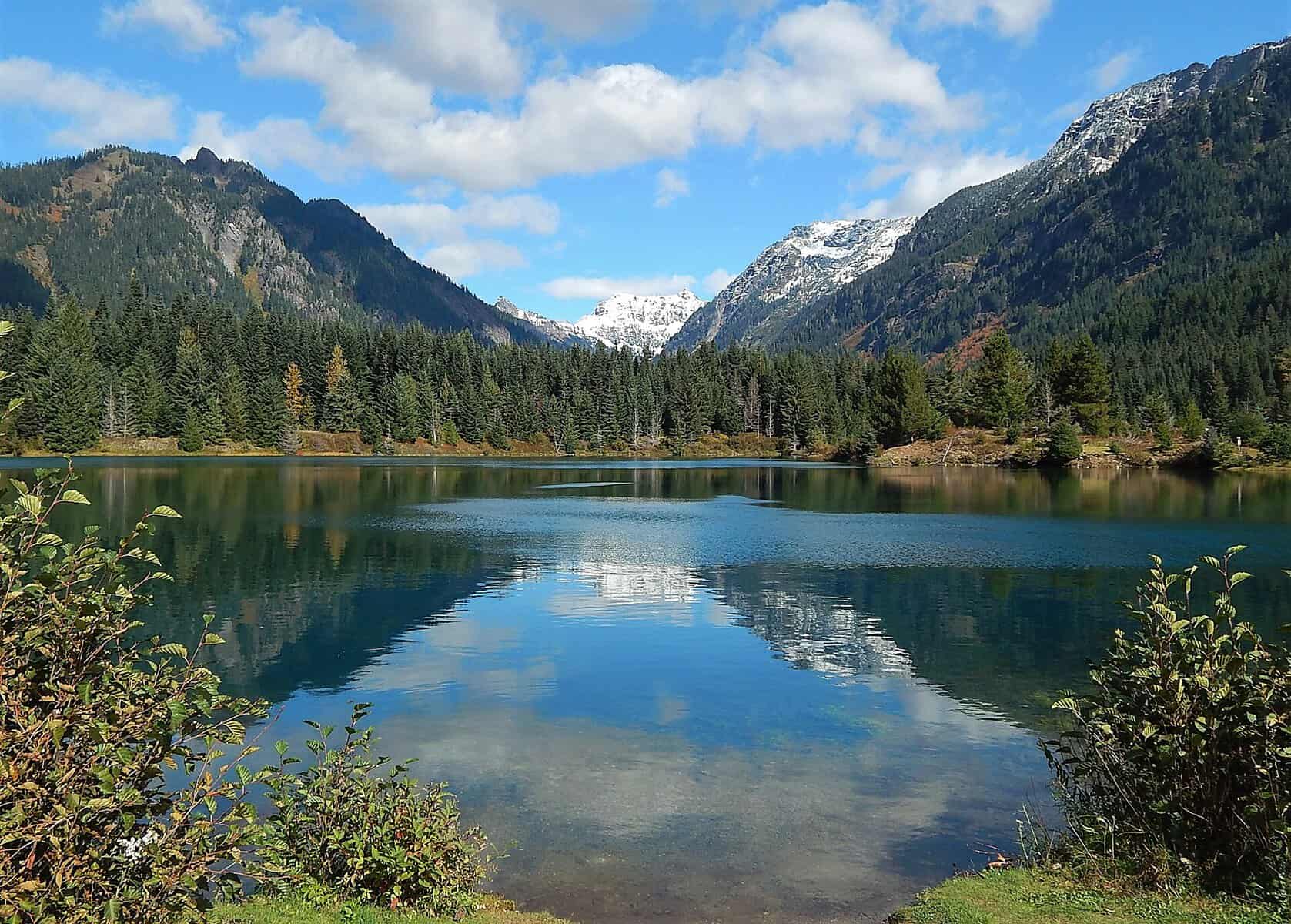
Gold Creek Pond is one of those places that looks almost too beautiful to be real. A small mountain pond sits beneath dramatic peaks, surrounded by evergreen forest and a wide alpine valley that becomes especially magical after fresh snowfall.
It’s long been one of the most popular beginner snowshoeing destinations near Seattle, largely because the terrain around the pond is relatively flat. You get lovely mountain scenery without needing to climb a steep trail or commit to an exhausting day.
In winter, the usual summer trailhead isn’t plowed, so visitors begin from the Gold Creek Sno-Park area and walk farther to reach the pond. The summer loop around the water is only about a mile, but the Washington Trails Association lists the full winter snowshoe outing at approximately 2.8 miles roundtrip.
On a clear day, the snowy mountain backdrop is particularly impressive. For photographers, the combination of frozen-looking shorelines, dark evergreen trees and the surrounding peaks can be spectacular.
Critical 2026–27 access update: Gold Creek Pond and the surrounding restoration project area are subject to seasonal closures from April 1 through November 30 each year through 2028. Winter non-motorized recreation is allowed December 1 through March 31, subject to on-site public safety conditions. As a result, this is not an October or November snowshoe option, and winter access should be confirmed before leaving Seattle.
Our tip: Stay near the pond on the established permitted route. The valley farther beyond Gold Creek Pond narrows into avalanche-prone terrain and is not a beginner extension. Never step onto the ice, even when the pond appears frozen. Parking can be very congested on sunny weekends.
Trail details: Washington Trails Association – Gold Creek Pond Snowshoe. Check the latest official restrictions before visiting.
2. Hyak Sno-Park – Best Easy Snowshoeing at Snoqualmie Pass
Location: Hyak, Snoqualmie Pass
Distance: Flexible; choose approximately 1–3 miles on permitted winter routes
Time: Around 45 minutes–2 hours depending on your turnaround
Difficulty: Easy on suitable lower-level routes
Parking: Hyak Sno-Park, I-90 Exit 54
Permit: Sno-Park permit; special-groomed rules apply
For a convenient snow day near Seattle, Hyak is one of the first places we’d consider. It’s just east of the Snoqualmie Pass summit, and you can reach a genuine winter mountain landscape without driving several hours deep into the Cascades.
Hyak is particularly well known for its sledding area, but it also provides access to winter recreation trails and the snow-covered Palouse to Cascades State Park Trail corridor.
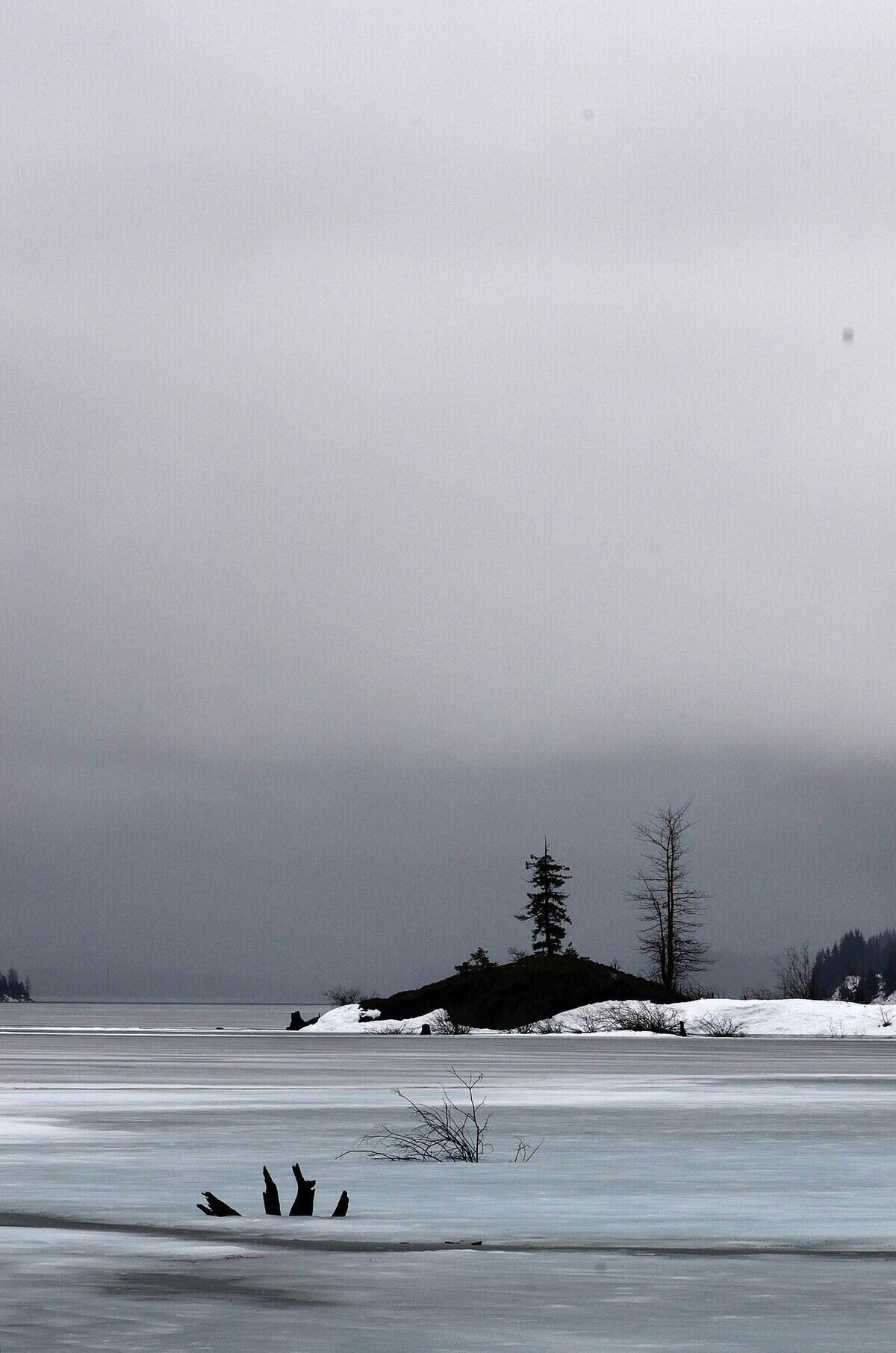
On a good snow day, the setting is beautiful. Evergreen trees are dusted in white, the surrounding hills rise above the trail and the nearby Keechelus Lake landscape adds to the mountain atmosphere.
For beginners, we recommend keeping the outing simple. Choose a clearly permitted snowshoe section near the developed Sno-Park, walk for a comfortable distance and turn around before you become tired. There’s no need to attempt the entire seven-mile winter trail network.
Our tip: Hyak is shared by different winter recreation users, including cross-country skiers. Snowshoers should obey designated-use signs and stay off the groomed ski tracks. Dogs are not allowed on Hyak’s groomed area or groomed trails. The designated sledding hill is a separate activity area, not a snowshoeing route.
For more ideas for the same area, read our guide to the best places to see snow near Seattle without skiing.
Official information: Washington State Parks – Hyak Sno-Park.
3. Lake Easton Sno-Park – Peaceful Snowshoeing Through the Forest
Location: Lake Easton State Park, east of Snoqualmie Pass
Distance: Flexible; approximately 1–3 miles depending on the chosen trail
Time: Around 1–2 hours
Difficulty: Easy on suitable developed winter routes
Parking: Lake Easton Sno-Park, I-90 Exit 70
Permit: Sno-Park permit; special-groomed rules apply
Lake Easton is a good alternative when you’re looking for a quieter forest experience rather than the busy snowplay atmosphere around Snoqualmie Pass.
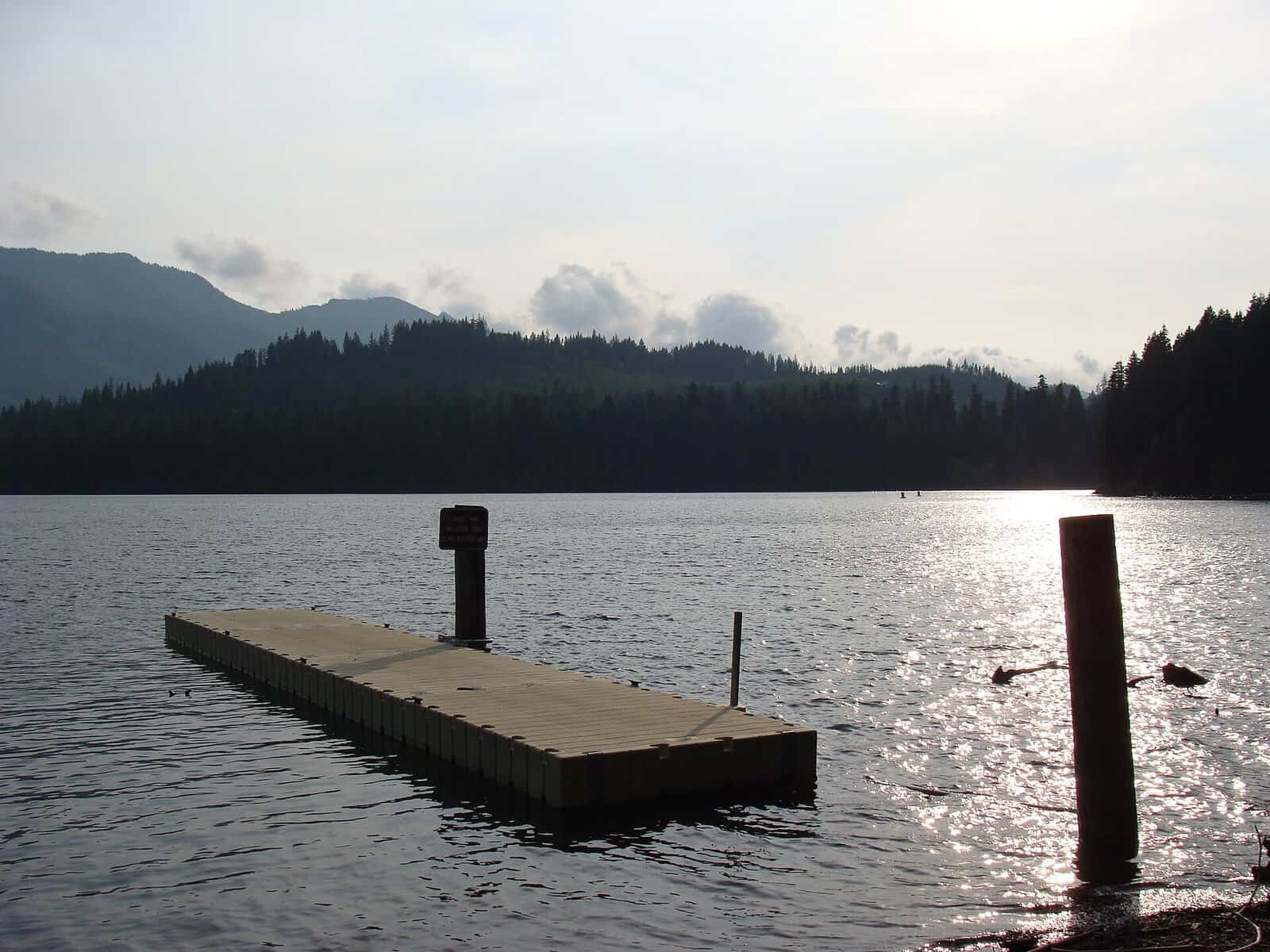
The state park sits beside Lake Easton, surrounded by evergreen forest and the eastern slopes of the Cascade Mountains. When there’s enough snow, its trails provide a lovely setting for relaxed winter walking and snowshoeing.
Unlike routes that require climbing high onto open mountainsides, Lake Easton has lower-elevation trails where you can enjoy the trees, peaceful woodland and changing winter landscape without committing to a serious backcountry outing.
The Washington Trails Association highlights Lake Easton as a family-friendly snowshoe destination, with opportunities to follow park trails or portions of the Palouse to Cascades corridor.
One thing we appreciate about this type of destination is the flexibility. You can enjoy a relatively short outing or spend more time exploring the appropriate non-motorized routes when conditions are good.
Our tip: Lake Easton is lower than many mountain snowshoe trails, so snow coverage can be less reliable during warm spells. In March 2026, the park reported bare spots and suspended grooming. Check the latest report rather than assuming snow will be present because Snoqualmie Pass looks white. Follow the winter trail map and avoid snowmobile routes or marked ski tracks.
Official information: Lake Easton Sno-Park.
4. Crystal Springs Sno-Park – A Winter Trail Network East of Snoqualmie Pass
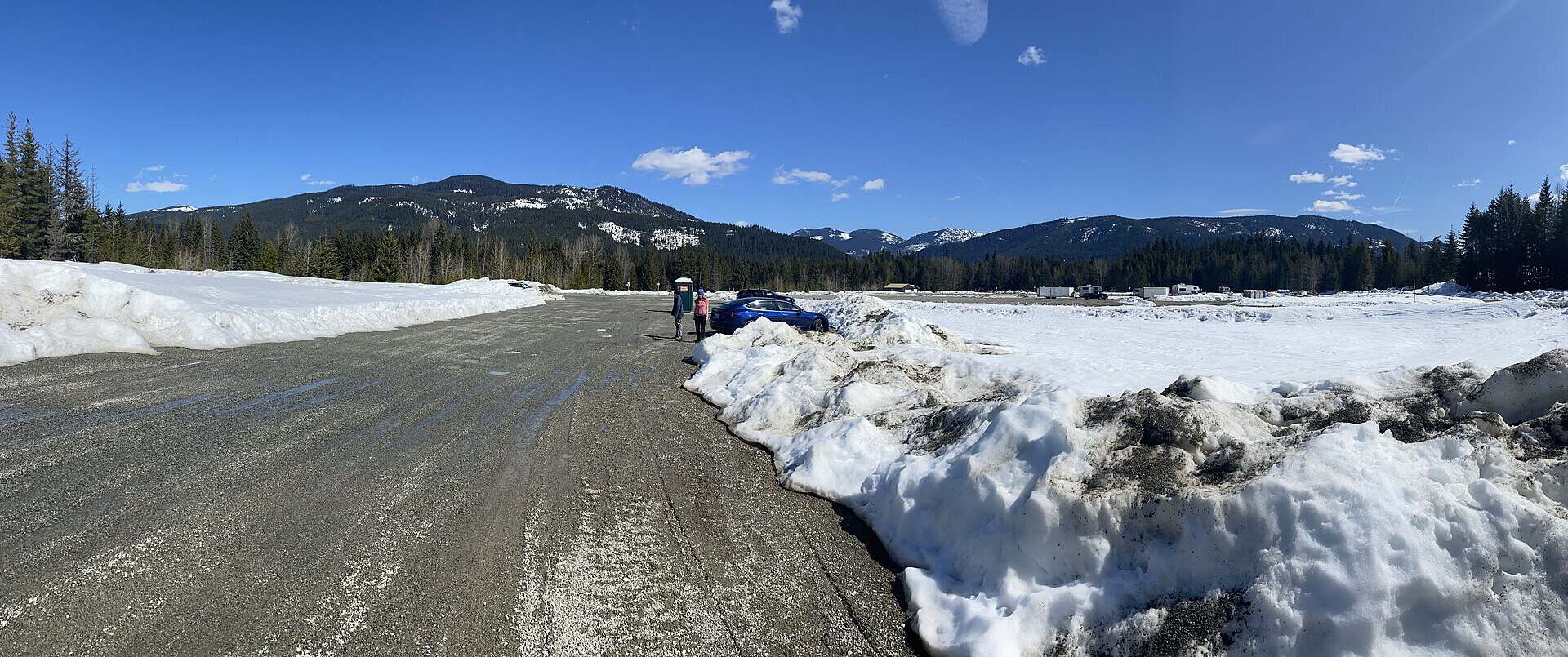
Location: Approximately eight miles east of Snoqualmie Summit
Distance: Flexible; choose a short marked snowshoe outing of approximately 1–3 miles
Time: 1–2 hours depending on the selected section
Difficulty: Easy–moderate on suitable designated routes
Parking: I-90 Exit 62, then Forest Road 54
Permit: Sno-Park permit; special-groomed rules apply
Crystal Springs offers a different style of snowshoeing experience from the short routes around a single pond or viewpoint.
This established Sno-Park is part of a much larger winter recreation network, with forested trails used by cross-country skiers, snowshoers, sled-dog teams and, in separate designated areas, snowmobiles.
That makes it an appealing option for people who want to explore beyond the busiest snowplay areas but still begin from an established winter parking location.
The surrounding forest can be beautiful after fresh snowfall, particularly when the branches of the tall evergreens are covered in white. On quieter mornings, it can feel wonderfully peaceful away from the main parking area.
However, Crystal Springs is a place where the winter trail map really matters. The advertised 51 miles refer to the wider recreation network, not 51 miles of dedicated beginner snowshoe trails.
Our tip: Check the official non-motorized map and select a designated snowshoe route rather than improvising through mixed-use or groomed ski trails. Significant storm damage, utility work and a landslide affected parts of the Crystal Springs network in March 2026. Those reports are not a confirmation of the 2026–27 reopening status, so verify current closures before travelling.
Official information and maps: Washington State Parks – Crystal Springs Sno-Park.
5. Stevens Pass Nordic Center – Best Dedicated Snowshoe Trails for Beginners
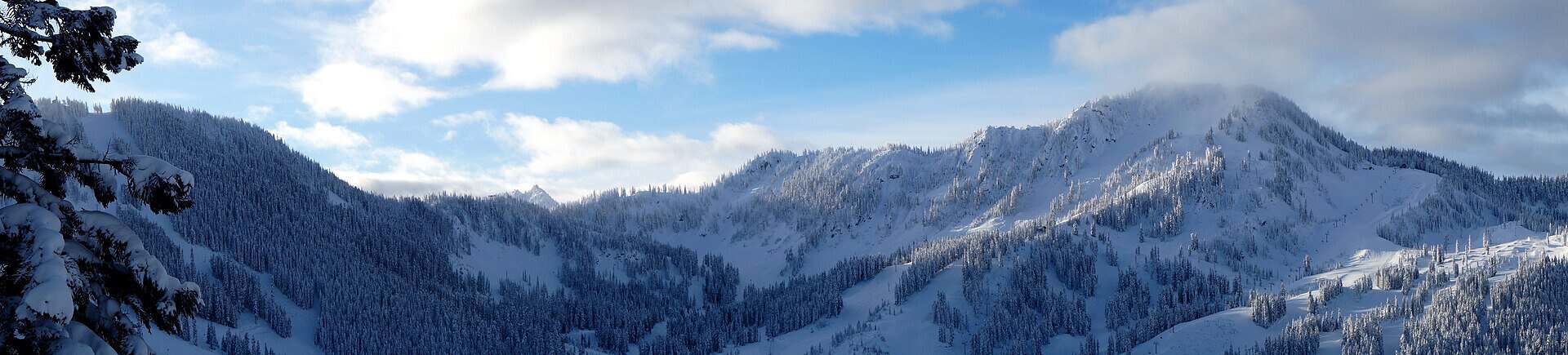
Location: Highway 2, approximately five miles east of Stevens Pass summit
Distance: Hobo Hop approximately 0.5 mile; Steppin’ Stoker 2.2 miles; longer combined route approximately 2.6 miles
Time: 30 minutes–2.5 hours depending on the route
Difficulty: Easy–moderate
Starting point: Stevens Pass Nordic Center / Cascade Depot
Permit: Nordic Center trail ticket required for the managed snowshoe system
For someone who wants to try snowshoeing but isn’t excited about navigating an unmarked mountain trail, Stevens Pass Nordic Center is one of our strongest recommendations.
Located east of the main Stevens Pass ski resort, the Nordic Center provides established winter recreation routes, including trails specifically designated for snowshoeing.
The experience feels different from simply following a snow-covered road. Dedicated snowshoe routes wind through evergreen forest and alongside Mill Creek, with options suitable for shorter outings or a more substantial winter walk.
The Washington Trails Association describes several routes worth considering:
- Hobo Hop: Approximately 0.75 kilometres, a short option for getting comfortable on snowshoes.
- Steppin’ Stoker: Approximately 3.5 kilometres, with forest and creek scenery.
- Combined Nordic Center snowshoe circuit: Approximately 4.25 kilometres using sections of Clickity Clack, Hobo Hop, Coal Burner and Steppin’ Stoker.
These options make it easier to select a walk that fits your experience level. The shorter trails are particularly appealing when you’re learning how to move comfortably on snowshoes.
Our tip: Snowshoeing is not permitted on the main Stevens Pass ski resort slopes. Go to the Nordic Center and stay on designated snowshoe trails. A Nordic trail pass is required for the managed trail system, and resort operating schedules and ticket prices can change. The separate Lanham Lake backcountry trail is not part of the controlled Nordic snowshoe network.
Trail information: Washington Trails Association – Stevens Pass Nordic Center. Check Stevens Pass for current trail tickets and operations.
6. Lanham Lake – A Rewarding Snowshoe Hike Near Stevens Pass
Location: Stevens Pass east side
Distance: 3.2 miles roundtrip
Elevation gain: Approximately 1,100 feet
Time: Allow 2.5–4 hours in winter
Difficulty: Moderate, with backcountry winter hazards
Starting point: Trail access near Stevens Pass Nordic Center parking area
Permit: Check WTA’s current parking and access notes; the backcountry route is separate from the ticketed Nordic trails
If you’re comfortable on snowshoes and want something more challenging than a flat forest stroll, Lanham Lake offers an enjoyable progression.
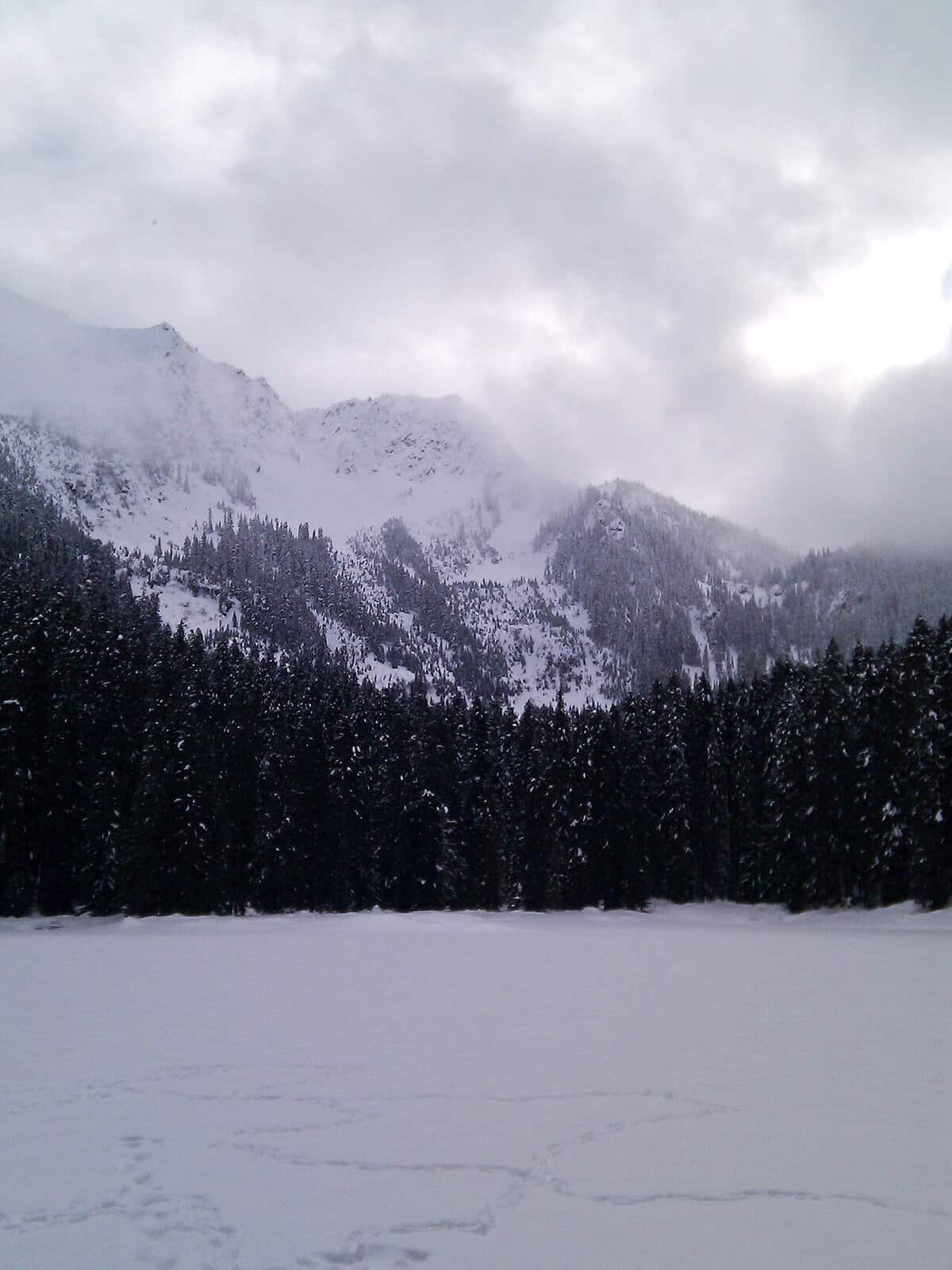
This approximately 3.2-mile roundtrip route climbs steadily through forest towards a small mountain lake in the Stevens Pass area. With around 1,100 feet of elevation gain, it provides a real workout without being an exceptionally long hike.
One of the main attractions is the quiet forest setting. Snow-covered branches, deep winter shadows and the muted sounds of the mountains create a very different atmosphere from the nearby ski resort.
Reaching the lake is a satisfying reward, especially on a clear winter day when sunlight filters through the trees. But the terrain is considerably more serious than the dedicated beginner trails at the Nordic Center.
Snow can hide the summer footpath, and navigation may require more than simply following previous footprints. The route also crosses an active winter mountain environment with avalanche and snow-bridge hazards.
Our tip: We would not recommend Lanham Lake as someone’s very first unguided snowshoe trip. Choose it only if you’re comfortable with winter navigation, prepared for backcountry conditions and able to evaluate the current avalanche forecast and terrain. Never cross the frozen lake. If you’re uncertain, try Stevens Pass Nordic Center’s marked routes instead.
Trail information: Washington Trails Association – Lanham Lake Snowshoe.
7. Lake Wenatchee State Park – Beautiful Snowshoeing Near Leavenworth
Location: Lake Wenatchee State Park, about 20 miles northwest of Leavenworth
Distance: North area has approximately 2.4 miles of designated snowshoe routes; South area approximately 3 miles
Time: Around 1–2.5 hours, depending on route
Difficulty: Easy on suitable marked trails
Starting point: North or South Lake Wenatchee Sno-Park entrance
Permit: Sno-Park permit; special-groomed rules apply
Lake Wenatchee is one of the prettiest winter destinations in Central Washington, and snowshoeing is a lovely way to experience it without the pace of a busy ski resort.
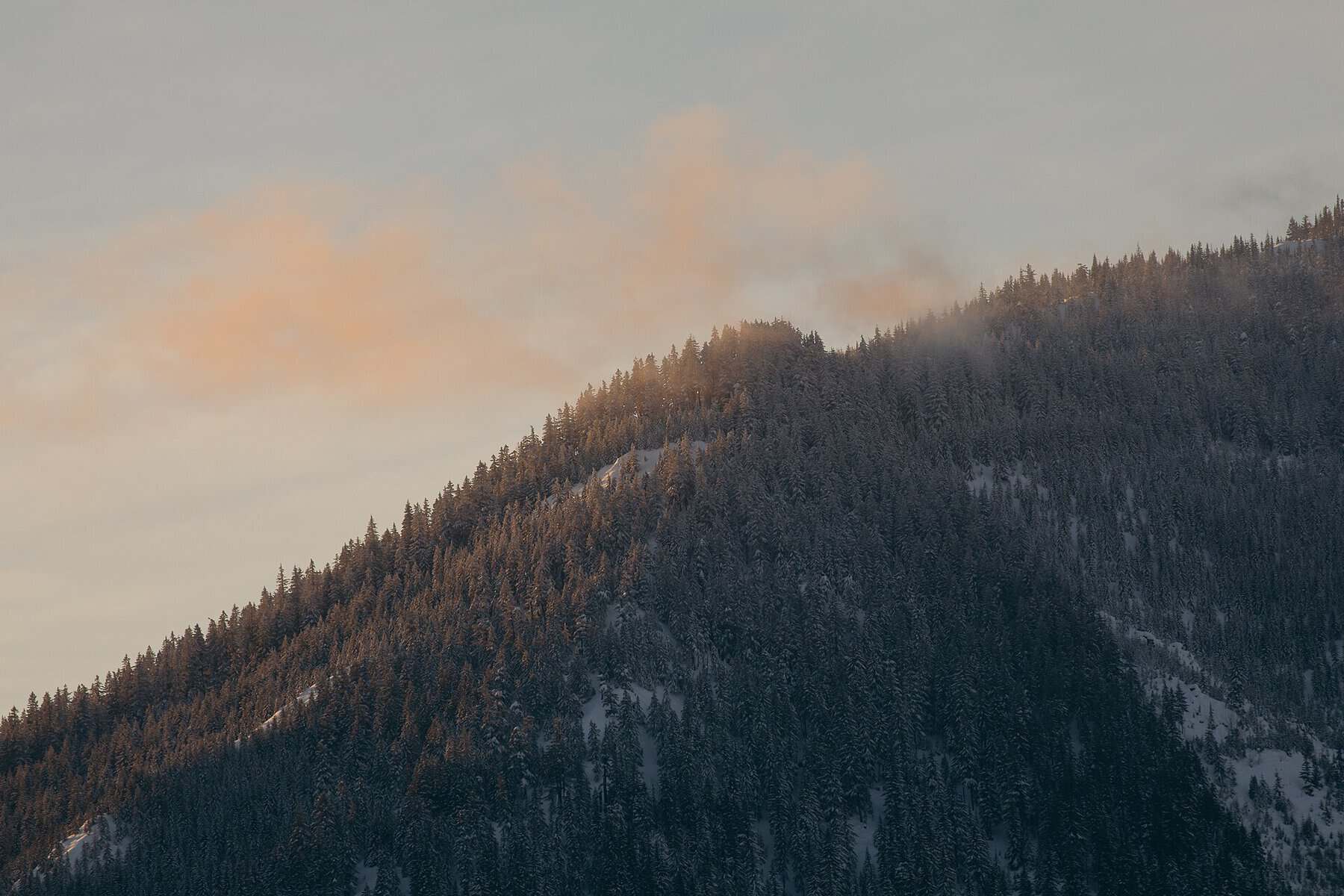
The lake is surrounded by forested mountains, and during a snowy winter the landscape can be spectacular. Deep white snow contrasts with dark evergreen trees and the mountain slopes rising beyond the shoreline.
Lake Wenatchee State Park has two main winter recreation areas, known as the North Lot and South Lot. Both provide designated snowshoe opportunities, along with groomed cross-country skiing areas.
For snowshoers, the key is to follow the designated routes rather than walking over the tracks prepared for skiers. The North and South areas offer different trail options, so choose one based on your available time and current conditions.
One of the big advantages of Lake Wenatchee is its proximity to Leavenworth. You can spend part of the day enjoying the snowy forest, then head into the Bavarian-style village for dinner, shops and a relaxing evening.
It’s a great combination for a winter weekend. We particularly like pairing outdoor activities with somewhere comfortable to stay rather than trying to fit everything into a long day of driving.
Our tip: The South Lot has heated bathrooms and a warming hut, while the North Lot has vault toilets. There’s also a designated sledding hill at the South Lot when conditions allow. Never venture onto the lake ice. Check winter trail grooming, snow cover and the dog rules for the specific route you choose.
Planning an overnight stay? Read our complete guide to Leavenworth in winter and our recommendations for the best hotels in Leavenworth.
Official information: Washington State Parks – Lake Wenatchee Sno-Park.
8. Nason Ridge – Best Moderate Snowshoe Trail with Mountain Views
Location: Kahler Glen / Nason Ridge, near Lake Wenatchee
Distance: 3.6 miles roundtrip to the Big Red ponderosa pine turnaround
Elevation gain: Approximately 750 feet
Time: Allow 2–3 hours
Difficulty: Moderate
Starting point: Kahler Glen winter Sno-Park area
Permit: Sno-Park permit; special-groomed rules apply
If you want a little more of a workout while exploring the Lake Wenatchee area, Nason Ridge is one of the better choices.
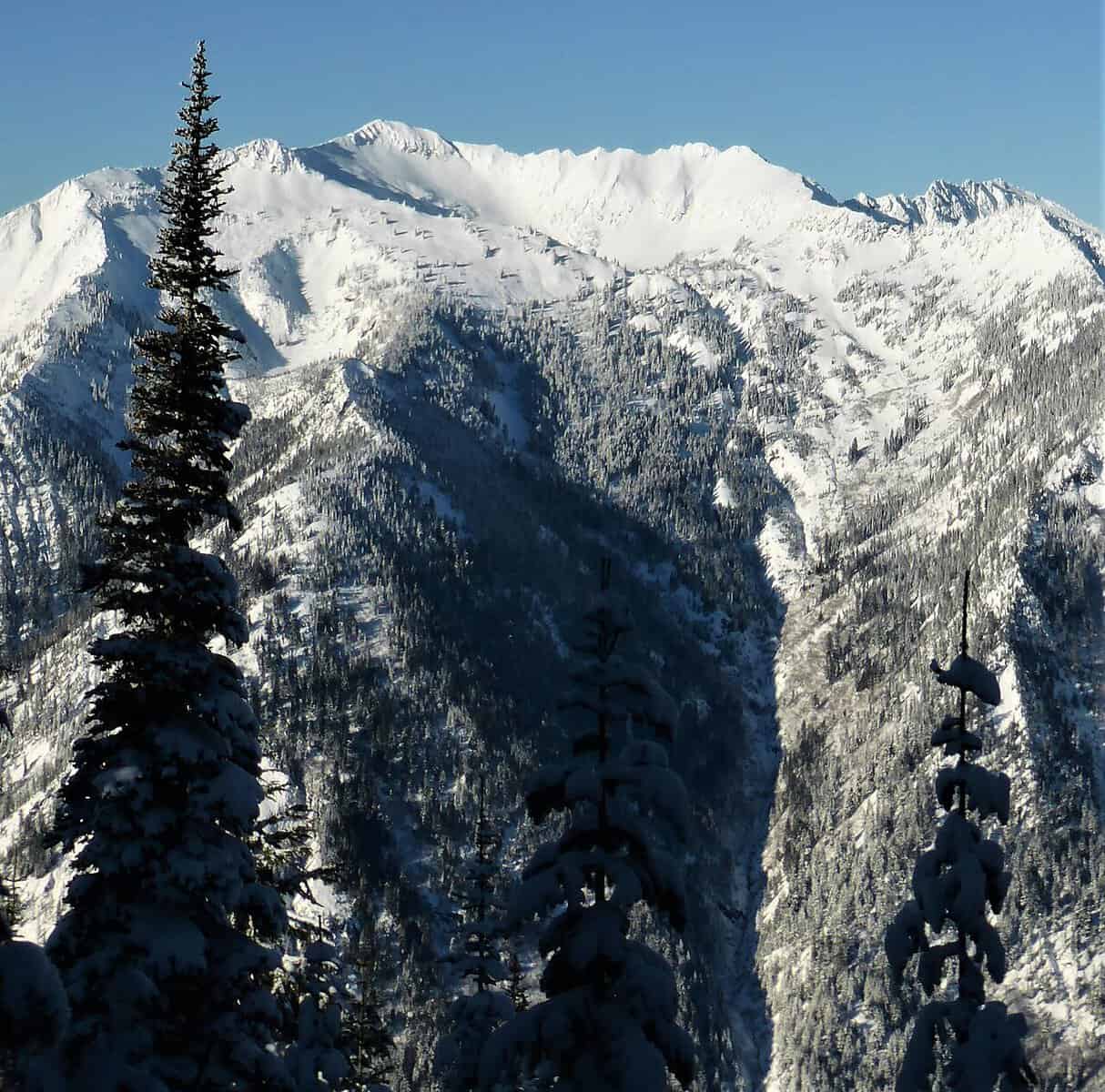
This snowshoe route climbs through forest and opens up to attractive views towards Lake Wenatchee, Fish Lake and the surrounding mountains. It’s a satisfying outing for walkers who have tried shorter trails and are ready for something with more elevation gain.
The Washington Trails Association describes a 3.6-mile roundtrip route to an impressive old ponderosa pine known as Big Red. It’s a natural turnaround point and a memorable feature along the trail.
One of the things that makes this route special is how the scenery changes as you climb. The lower trail passes through woodland, while higher sections provide views towards Dirty Face Mountain, the lake and the broader Chiwawa Valley.
On a clear day, the views are a wonderful reward for the effort. And if you’re staying around Leavenworth or Lake Wenatchee, Nason Ridge offers a more active adventure without requiring a long drive to another part of the Cascades.
Our tip: Start from the correct winter parking area at Kahler Glen, not the summer trailhead. The snowshoe route crosses the golf course area before climbing the ridge, and it’s important to follow the snowshoe markers rather than the groomed cross-country ski tracks. WTA describes an additional extension beyond Big Red to a warming hut, but that makes the outing longer than the 3.6-mile route listed here.
Trail information: Washington Trails Association – Nason Ridge Snowshoe. See also Washington State Parks – Nason Ridge Sno-Park.
9. Mount Rainier Paradise – Most Spectacular Snowshoeing Day Trip from Seattle
Location: Paradise, Mount Rainier National Park
Distance: Approximately 1.5 miles for the ranger-guided walk
Time: Approximately 2 hours for the guided experience
Difficulty: Beginner-friendly when led by a ranger and conditions permit
Starting point: Henry M. Jackson Memorial Visitor Center, Paradise
Access: National park entrance requirements and winter road restrictions
When it comes to unforgettable winter scenery, Mount Rainier is in a league of its own.
The Paradise area receives enormous amounts of snow, transforming the landscape into a beautiful world of deep snowbanks, snow-covered evergreens and dramatic mountain scenery.
On a clear day, seeing Mount Rainier towering above the snowy landscape is absolutely spectacular. And if you’ve only ever visited the national park in summer, experiencing it in winter offers an entirely different perspective.
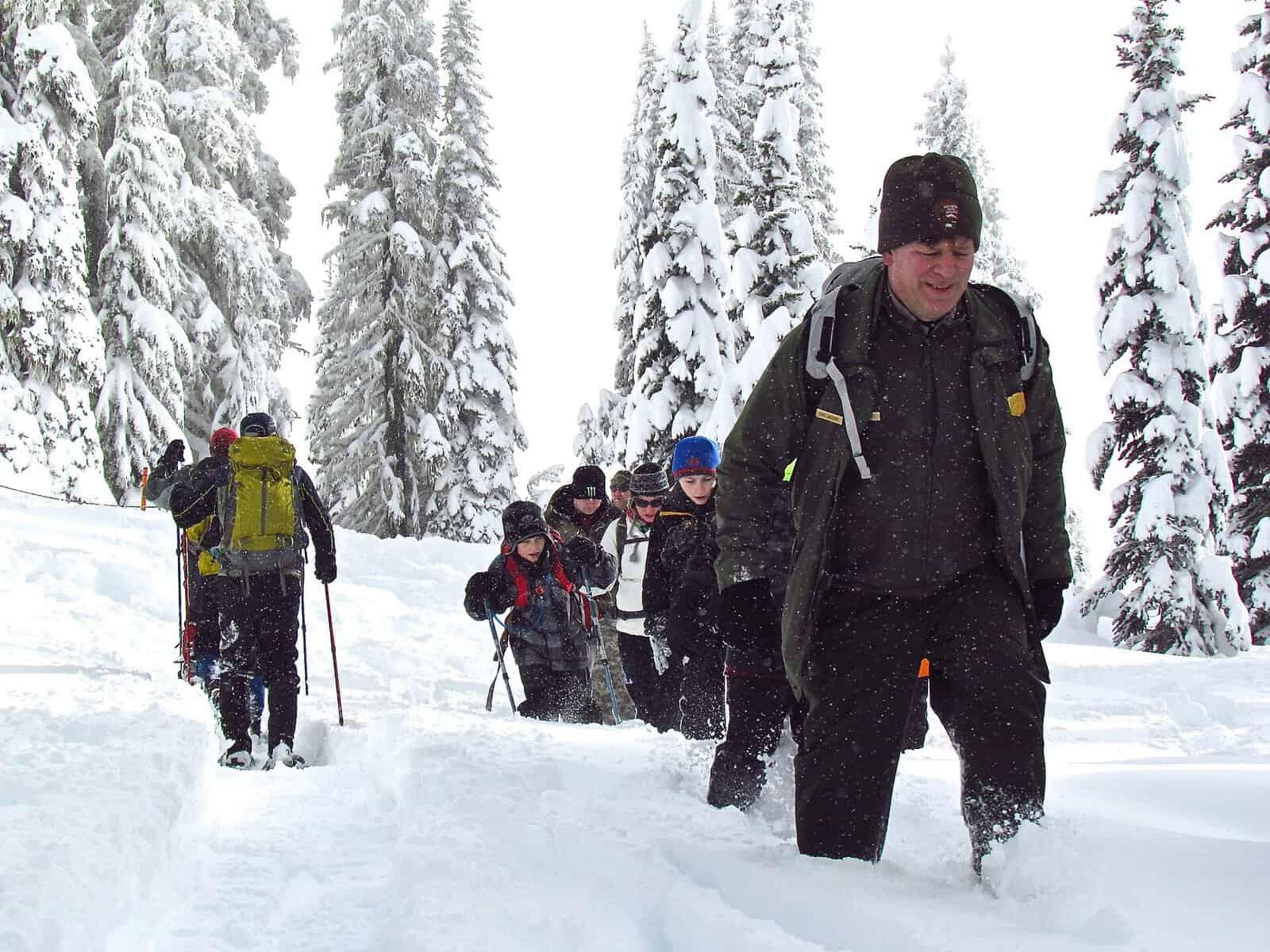
One of the best options for less experienced visitors is the National Park Service’s ranger-guided snowshoe walk. These outings introduce visitors to winter travel while exploring the natural history and ecology of the snowy park.
The guided walk typically covers about 1.5 miles in two hours, with snowshoes provided for participants during the activity. Ranger-led outings are usually offered on selected weekends from late December through March, subject to staffing and conditions.
2026–27 update: As of October 19, 2026, the National Park Service reported that this winter’s ranger-guided snowshoe walks had not started and the schedule was still pending. Do not assume they will be available on your chosen date.
Independent snowshoeing is also possible in Paradise when permitted, but it involves serious winter hazards. Snow can hide steep slopes, streams, unstable bridges and avalanche terrain. Beginners without winter-navigation and avalanche-awareness skills should not improvise a route into the backcountry.
Our tip: The road between Longmire and Paradise closes nightly during winter and may remain closed all day during unsafe conditions. All vehicles must carry tire chains in Mount Rainier National Park from November 1 through May 1, including vehicles with all-wheel drive. The park does not allow pets on snow or trails, except qualified service animals.
Because Paradise can take several hours to reach from Seattle in winter, check the road gate status before leaving and have a backup plan around Longmire or Ashford.
Official information: National Park Service – Mount Rainier Winter Recreation and Mount Rainier Winter Road Information.
10. Salmon La Sac Sno-Park – A Quieter Snowshoe Escape Near Cle Elum
Location: Salmon La Sac, north of Cle Elum and Roslyn
Distance: Flexible; the wider Sno-Park has approximately four miles of non-motorized recreation trails
Time: Allow 1–2 hours for a short marked outing
Difficulty: Easy–moderate, depending on the selected route and conditions
Parking: Salmon La Sac Sno-Park, via I-90 Exit 80 and State Route 903
Permit: Washington Sno-Park permit
If your idea of a good snowshoeing day involves peaceful forest, fewer crowds and a little more of an off-the-beaten-path atmosphere, Salmon La Sac deserves a look.
North of Cle Elum and the historic town of Roslyn, this part of the Central Cascades feels noticeably different from the busy Snoqualmie Pass resort area.
The surrounding countryside has beautiful forested valleys, mountain scenery and a strong sense of wilderness. It’s an attractive area for winter photography, nature lovers and anyone who prefers quiet outdoor activities.
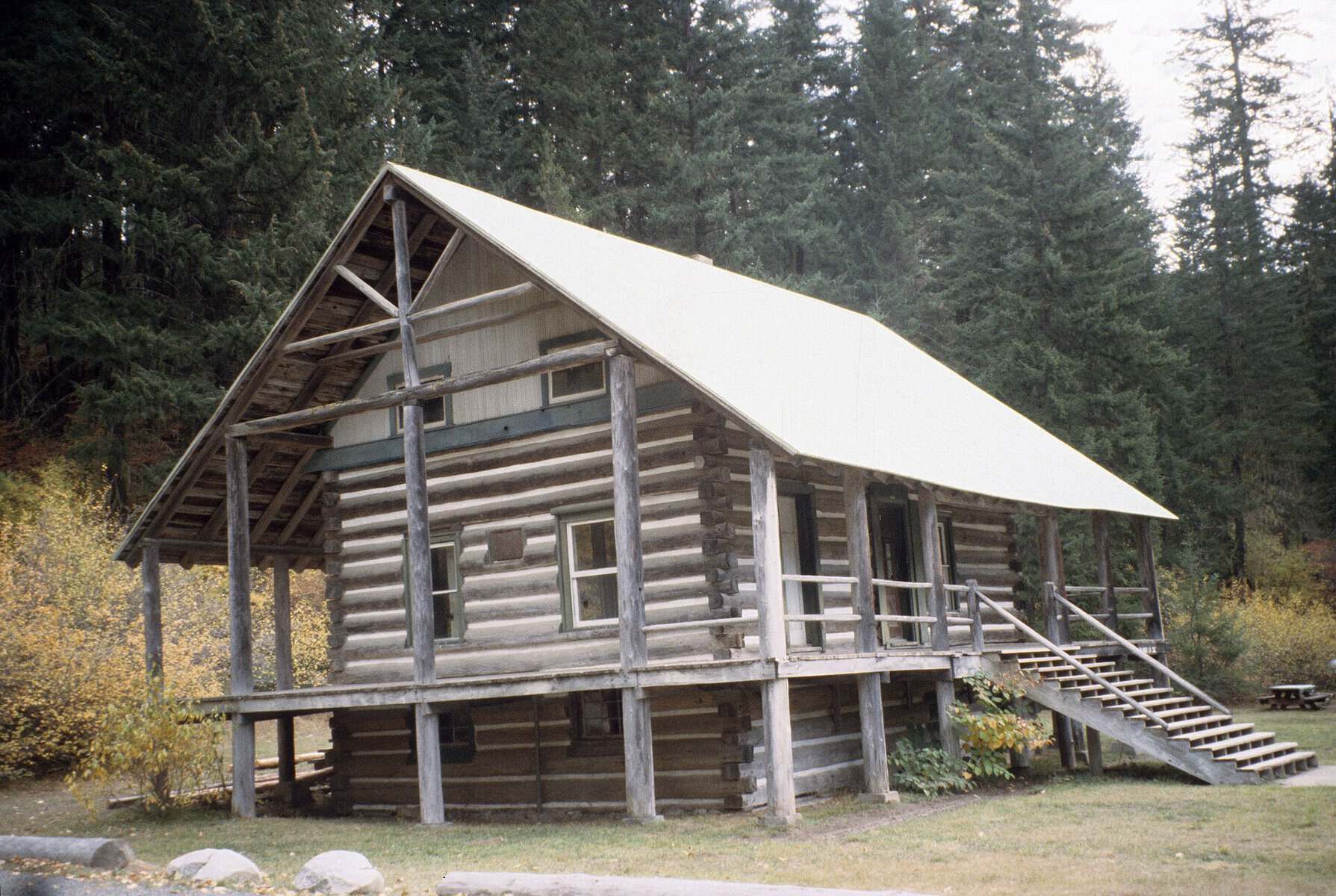
Salmon La Sac Sno-Park provides access to a mixture of winter recreation trails. Washington State Parks identifies approximately four miles of non-motorized trails and a substantially larger motorized snowmobile network.
That distinction matters. This isn’t somewhere to simply set off along the first snow-covered road you find. Choose a marked non-motorized route, check the official map and pay attention to snowmobile crossings and closures.
We especially like the idea of combining a snowshoe outing here with time in Roslyn or Cle Elum. Both communities have a great small-town atmosphere and make appealing stops for food or a warm drink after spending time outdoors.
Our tip: Snow coverage can vary, and routes may be shared or intersect with snowmobile corridors. Check winter grooming and access updates, carry navigation and turn around if route signs or conditions become unclear. Salmon La Sac is a good option for a planned outing, not an excuse to wander into unmarked backcountry terrain.
Official information: Washington State Parks – Salmon La Sac Sno-Park.
Where Should Beginners Go Snowshoeing Near Seattle?
If you’ve never tried snowshoeing before, the good news is that it doesn’t take long to get comfortable with the basic movement. It feels a lot like walking, just with a wider stance and a little more effort when the snow is soft.
The trick is choosing the right location for your first adventure.
We would prioritize marked, lower-gradient trails near developed winter recreation areas rather than heading directly into the backcountry. Gold Creek Pond is a traditional beginner favourite during its permitted winter access period, while Hyak and Lake Easton have flexible outings for people who want to start small.
For a more structured outing, Stevens Pass Nordic Center has designated snowshoe trails, and Mount Rainier offers ranger-guided experiences when scheduled.
For a first trip, there’s nothing wrong with walking for 30 or 45 minutes, stopping for some photographs and then returning to the car. In fact, that’s often a much better experience than choosing a route that leaves everyone exhausted or cold.
Do You Need a Permit to Go Snowshoeing Near Seattle?
One of the most confusing parts of planning a winter outing in Washington is figuring out which parking permit you need. The answer depends on the location, and a Discover Pass is not a substitute for a Sno-Park permit.
Washington State Parks currently lists the following non-motorized Sno-Park permit prices:
| Permit | Listed price | What it covers |
|---|---|---|
| One-day Sno-Park permit | $25 | One day of parking at a designated Sno-Park; no separate groomed-trail sticker required |
| Seasonal Sno-Park permit | $50 | Season parking at Sno-Parks that do not require the special groomed sticker |
| Special groomed-trail sticker | $70 additional | Required with a seasonal permit at designated special-groomed Sno-Parks |
| Seasonal + special groomed sticker | $120 total | Seasonal combination for designated special-groomed locations |
Important: Hyak, Lake Easton, Crystal Springs, Lake Wenatchee and Nason Ridge are among the special-groomed Sno-Parks. An ordinary one-day Sno-Park permit covers the day visit, but seasonal permit holders need the additional groomed sticker at these locations.
Stevens Pass Nordic Center is different: the managed snowshoe trails require a Nordic Center trail ticket. Mount Rainier uses national park entry rules rather than Washington State Sno-Park parking permits.
Purchase permits and check the official list at Washington State Parks Sno-Park Permits.
What to Bring Snowshoeing Near Seattle
You don’t need an enormous collection of expensive winter equipment for an easy, well-managed snowshoe route, but a few essentials make the day much more comfortable and safer.
- Snowshoes: Choose a size suited to your weight, footwear and snow conditions. Rentals can be a great option for your first outing.
- Waterproof winter boots: Insulated, supportive boots make a huge difference when walking through snow.
- Warm, moisture-wicking layers: Start with a base layer and add an insulating layer plus waterproof or windproof outer clothing.
- Waterproof gloves and a warm hat: Bring an extra pair of gloves if the weather is wet.
- Trekking poles: Poles with snow baskets can help with balance and climbing.
- Water and snacks: Winter activities still require hydration, even when you don’t feel thirsty.
- Offline maps: Download the route before leaving Seattle. Phone reception can be unreliable in the mountains.
- Headlamp: Winter daylight is short, and even a minor delay can leave you returning after sunset.
- Extra warm clothing: Keep a dry layer in your daypack and a complete change of clothes in the vehicle.
- Winter emergency supplies: Include a first-aid kit, emergency shelter, communication plan and supplies appropriate to the location.
For backcountry routes that may enter avalanche terrain, equipment alone isn’t enough. Travellers need appropriate avalanche education, route-planning skills, a transceiver, probe and shovel, and companions trained to use them. If that’s beyond your experience, stick to suitable marked routes or join a qualified guide.
Where Can You Rent Snowshoes Near Seattle?
If you’re trying snowshoeing for the first time, renting equipment is often smarter than buying. You can find out whether you enjoy the activity before investing in your own snowshoes.
Outdoor equipment rental options in the greater Seattle area may include REI rental locations and independent outdoor retailers, depending on the season and individual shop availability. Check rentals in advance, especially for popular winter weekends.
At Mount Rainier, the National Park Service provides snowshoes for participants on its ranger-guided walks, when those walks are operating. The Longmire General Store is another potential rental option, subject to availability. Managed Nordic facilities may also have rental services, but verify them directly before you go.
If you’re renting, ask whether trekking poles are included, how the snowshoes fit your boots and whether there are restrictions on taking the equipment into backcountry terrain.
When Is the Best Time to Go Snowshoeing Near Seattle?
For most accessible mountain snowshoe destinations around Seattle, January through March is usually the most reliable period. However, some higher-elevation areas can receive snow earlier, and conditions may remain snowy well into spring.
| Month | What to expect |
|---|---|
| November | Early mountain snow is possible, but Sno-Park operations and some trails may not yet be ready |
| December | Winter recreation season begins at many locations; snow coverage is variable |
| January | Often good snowshoe conditions at established mountain destinations |
| February | Frequently a strong month for snow coverage, although storms and avalanches remain important concerns |
| March | Longer daylight hours; snow can range from fresh powder to icy or wet spring conditions |
| April | Higher elevations may remain snowy, while Sno-Park grooming and seasonal access arrangements wind down |
One of the quirks of Pacific Northwest winters is that a trail can have deep snow one weekend and rain, ice or exposed ground the next. The winter of 2025–26 demonstrated just how much lower-elevation snow conditions can fluctuate.
Instead of choosing a trail purely because it looks beautiful online, check recent trip reports, current snowfall, weather forecasts and road conditions a day or two before your outing, then check again before leaving.
Winter Driving and Avalanche Safety Near Seattle
Snowshoeing around Seattle is wonderfully accessible compared with some mountain destinations, but getting there safely is part of the adventure.
Before heading towards Snoqualmie Pass, Stevens Pass or Mount Rainier, check the forecast and the most recent road information. Washington’s mountain passes can close during severe winter weather, avalanche control or traffic incidents.
- Check WSDOT mountain passes: Use Washington State Department of Transportation for pass restrictions, cameras and road conditions.
- Review the avalanche forecast: Check the Northwest Avalanche Center and understand that avalanche exposure is determined by terrain, not just the difficulty rating of a route.
- Carry suitable vehicle traction: Follow posted chain requirements. All vehicles entering Mount Rainier National Park must carry tire chains November 1 through May 1.
- Don’t park outside designated spaces: Snowplows and emergency vehicles need room to operate.
- Prepare for delayed travel: Keep extra water, food, warm clothing, a phone charger and emergency supplies in your vehicle.
- Start early: Winter days are short, and many Sno-Parks close at dusk. Mountain parking lots can also fill quickly on weekends.
- Don’t follow summer routes blindly: Winter trails can use completely different approaches, and summer paths may cross avalanche slopes.
- Stay off frozen water: Snow-covered ponds, lakes and creeks can conceal dangerous thin ice.
We also recommend leaving a simple trip plan with someone who isn’t joining you: where you’re going, who you’re with and when you expect to return.
Turn Your Snowshoe Adventure into a Winter Weekend Getaway
Many of these destinations work well as day trips from Seattle, but some are even more enjoyable when you stay overnight and avoid rushing home after a full day outdoors.
Snoqualmie Pass and Cle Elum
For snowshoeing around Hyak, Gold Creek, Crystal Springs or Lake Easton, consider staying in the Snoqualmie Pass area or around Cle Elum and Roslyn. You’ll be closer to the trails and can enjoy some of the small-town atmosphere on the eastern side of the Cascades.
Leavenworth and Lake Wenatchee
For Lake Wenatchee and Nason Ridge, Leavenworth is an excellent base. Spend the morning snowshoeing, then return to town for restaurants, shopping and beautiful mountain-village scenery.
Our Leavenworth hotel guide includes accommodation options for different budgets and travel styles, from cosy inns to romantic resorts.
Mount Rainier and Ashford
For Paradise, staying near Ashford can make the outing more relaxed. It’s an especially useful strategy if you want to be close to the Nisqually Entrance in the morning, although the road to Paradise can still close due to weather.
Always choose accommodation with a reasonable cancellation policy during winter, when a major storm can change travel plans overnight.
Frequently Asked Questions About Snowshoeing Near Seattle
Where is the best place to go snowshoeing near Seattle?
For beginners, Gold Creek Pond is a popular choice when the seasonal winter access rules permit entry and conditions are safe. Hyak Sno-Park and Lake Easton offer other relatively convenient options. For marked snowshoe-specific trails, Stevens Pass Nordic Center is especially appealing. Mount Rainier Paradise is one of the most scenic destinations when the winter road is open and guided outings are available.
What is the closest snowshoeing to Seattle?
Snoqualmie Pass is one of the most convenient destinations with generally reliable mountain snow during a typical winter. Hyak and Gold Creek Pond are roughly one to one-and-a-half hours from downtown Seattle under favourable driving conditions, although winter traffic and closures can increase that time considerably.
Can beginners go snowshoeing in Washington?
Absolutely. Snowshoeing is fairly intuitive on gentle terrain, and marked winter recreation routes can be an enjoyable introduction. The important part is choosing a trail that matches your experience, paying attention to weather and avalanche conditions, and avoiding unmarked mountain terrain. Consider a guided outing for your first experience.
Do you need snowshoes for groomed winter trails?
Not always. Some firm, packed walking surfaces may be manageable with suitable winter boots or traction devices, while deep snow usually requires snowshoes. Many groomed routes are reserved for cross-country skiers, so visitors must follow the specific trail-use rules and stay off ski tracks rather than assuming groomed paths are open for walking.
Do you need a Sno-Park permit to go snowshoeing?
Many designated Washington winter recreation parking areas require a Sno-Park permit. Some special-groomed locations also require a groomed-trail sticker with a seasonal permit. Other destinations, such as Mount Rainier National Park and Stevens Pass Nordic Center, have different admission or trail-ticket arrangements. Check the specific location before travelling.
Can you snowshoe at Snoqualmie Pass without skiing?
Yes. Snoqualmie Pass has several established winter recreation areas with snowshoe opportunities, including Hyak, Gold Creek Pond during its permitted winter season, Lake Easton and designated trails around Crystal Springs. You do not need to ski or snowboard to enjoy these locations, but you must respect any trail-use restrictions and avalanche closures.
Is Gold Creek Pond open for snowshoeing in winter 2026–27?
The current restoration closure order provides for winter non-motorized recreation from December 1 through March 31, subject to on-site public safety conditions. The Gold Creek area is otherwise closed April 1 through November 30 annually through 2028. Check the latest Forest Service restrictions and local access conditions before travelling.
Can you snowshoe at Mount Rainier without a guide?
Independent snowshoeing is possible in designated areas of Mount Rainier when access and conditions permit, but the park has serious avalanche hazards, steep terrain and winter navigation challenges. Less experienced visitors should consider ranger-guided walks when they are operating rather than attempting unguided travel into unfamiliar backcountry terrain.
Are dogs allowed on snowshoe trails near Seattle?
Some trails permit leashed dogs, including Gold Creek Pond during permitted access and the Lanham Lake and Nason Ridge snowshoe routes, subject to current rules. Other locations have restrictions: dogs are prohibited on Hyak’s groomed trails, and pets are not allowed on Mount Rainier’s trails or snow areas except qualified service animals. Always check the specific trail before bringing your dog.
When is the best month for snowshoeing near Seattle?
January, February and March are generally good months to consider, although conditions vary enormously from one winter to another. Higher-elevation snow can last longer than snow at lower destinations such as Lake Easton. The best day is one with adequate snow cover, manageable weather, safe avalanche conditions and open roads.
More Winter Adventures Around the Pacific Northwest
If you’re planning a snowy getaway, there are plenty of ways to enjoy winter around Washington beyond strapping on snowshoes.
- Best Places to See Snow Near Seattle Without Skiing – Family snowplay, tubing, mountain towns and beautiful winter scenery.
- Leavenworth in Winter: Things to Do and Where to Stay – A guide to one of Washington’s most popular snowy destinations.
- Best Hotels in Leavenworth, Washington – Find a comfortable base for exploring Lake Wenatchee and the surrounding mountains.
- Best Small Towns in Washington State – Discover more charming communities worth visiting throughout the year.
Final Thoughts: Snowshoeing Is One of Seattle’s Best Winter Adventures
There’s something pretty special about walking through a quiet, snow-covered forest in the Pacific Northwest. The mountains feel different in winter, the trees take on an entirely new character, and even a short walk can become a memorable adventure.
And the best part is that you don’t need to be a skier, snowboarder or experienced mountaineer to begin enjoying snowshoeing near Seattle.
For a first outing, we’d start with a suitable marked route around Hyak, Lake Easton or Gold Creek Pond when access and snow conditions are right. If you want a dedicated trail system, Stevens Pass Nordic Center is an excellent option. For unforgettable mountain scenery, a ranger-guided winter walk at Mount Rainier Paradise is hard to beat.
And if you’re ready for more of a workout, Nason Ridge or Lanham Lake provide rewarding alternatives for people with the appropriate winter experience.
Whatever route you choose, don’t worry about covering a huge distance. A couple of miles through a beautiful snowy forest, followed by a warm drink and a scenic drive home, can be the perfect Pacific Northwest winter day.
Just check the conditions first. Washington’s mountains are beautiful, but they aren’t interested in your weekend itinerary.
Have a favourite snowshoe trail near Seattle? We’d love to hear about your favourite winter spots around the Cascades.
Sources and research: Washington State Parks, Washington Trails Association, National Park Service, Stevens Pass, WSDOT and Northwest Avalanche Center. Distances for established routes are based on published guides. Flexible outings and estimated walking times are planning suggestions, not official route guarantees. Confirm all winter access and safety conditions before setting out.
Content creator and writer for multiple websites including All About Glamping, Fit Living Lifestyle, and Live Dream Discover. A full-time traveler who has spoken at various travel conferences around the world.